
It’s wild how we can see someone’s entire life on social media, their vacation pics, their coffee orders, their gym selfies, and still know nothing about who they really are. Seeing someone’s photo doesn’t tell you their story.
Remember that quiet kid from grade school? The one who barely spoke three words in six months? Then she got up at the talent show and blew everyone away with a voice that could rival Adele.
To everyone, she was just a quiet kid. Who knew her voice could tell a million stories?
Here’s the truth. Everyone has a talent or skill waiting to be discovered. All it takes is the right opportunity.
The struggle to access those opportunities is exactly why we have diversity, equity, and inclusion (DEI) initiatives and social legislation protecting underrepresented groups. One of the most important? The Americans with Disabilities Act (ADA) protects people with disabilities from discrimination in all areas of life, including employment.
What Is Title I of the Americans with Disabilities Act?
Signed into law in 1990, the ADA has been protecting civil rights for over three decades. Title I specifically addresses workplace discrimination, requiring employers to provide reasonable accommodations throughout the entire employment journey, from applications and interviews to day-to-day work life.
Who Qualifies as a Person with a Disability?
The law defines a person with a disability as someone who has “a physical or mental impairment that substantially limits one or more major life activities; has a record of such an impairment; or is regarded as having such an impairment.”
This broad definition acknowledges something important. Not all disabilities are visible. Some are physical but invisible, like chronic illnesses or autoimmune conditions. Others are cognitive or mental health-related, like ADHD, anxiety disorders, or autism spectrum conditions. The law recognizes all of them.

What Are the Benefits of ADA Compliance for Employers?
Beyond avoiding lawsuits (which can be costly), ADA compliance offers some serious business advantages.
Access to a Massive Talent Pool
You’re opening your doors to millions of talented individuals with disabilities. According to the CDC, about one in four American adults (roughly 28.7%) lives with some type of disability, yet the employment rate for people with disabilities remains significantly lower than that of the general population. That’s a huge pool of untapped talent you could be reaching.
Building a Stronger Employer Brand
Genuine commitment to ADA compliance builds your reputation both inside and outside your organization. It makes current employees proud to work for you and encourages them to refer talented friends, with or without disabilities. It signals that you genuinely care about your people, regardless of their circumstances.
Driving Innovation Through Diverse Perspectives
A diverse workforce isn’t just good ethics. It’s good business. when your team includes people with different backgrounds, experiences, and challenges, you get more creative problem-solving and innovative thinking. Different perspectives lead to better decisions.
How Do I Make My Workplace ADA Compliant?
There’s no rigid checklist for workplace accessibility. What the law requires is pretty straightforward. Provide reasonable accommodations that remove barriers preventing people with disabilities from applying for jobs or performing their work.
The ADA encourages employers to exceed the minimum requirements, too. And here’s the key insight. An accessible workplace goes way beyond physical space.
What Does Organizational Accessibility Mean?
Organizational accessibility is about getting your management, your people, and your company culture ready to genuinely welcome individuals with disabilities. This is your foundation. Everything else builds on this.
Start by training your managers and team members on ADA compliance. Then establish clear policies around these areas.
Applications, interviews, and onboarding for people with disabilities need documented processes. Your zero-tolerance stance on workplace discrimination should be crystal clear. Equal access to promotions and career growth opportunities must be guaranteed. Flexibility options like adjusted schedules or hybrid work should be available when needed. How employees can request and receive accommodations needs to be simple and well-communicated.
Want to go further?
- Consider offering basic sign language training for all employees
- Having interpreters for meetings
- Providing remote work options
- Creating dedicated mental health resources
- Creating employee resource groups (ERGs)
How Do I Make My Office Physically Accessible?
Physical accessibility means designing your space so everyone can move through it comfortably.
Think:
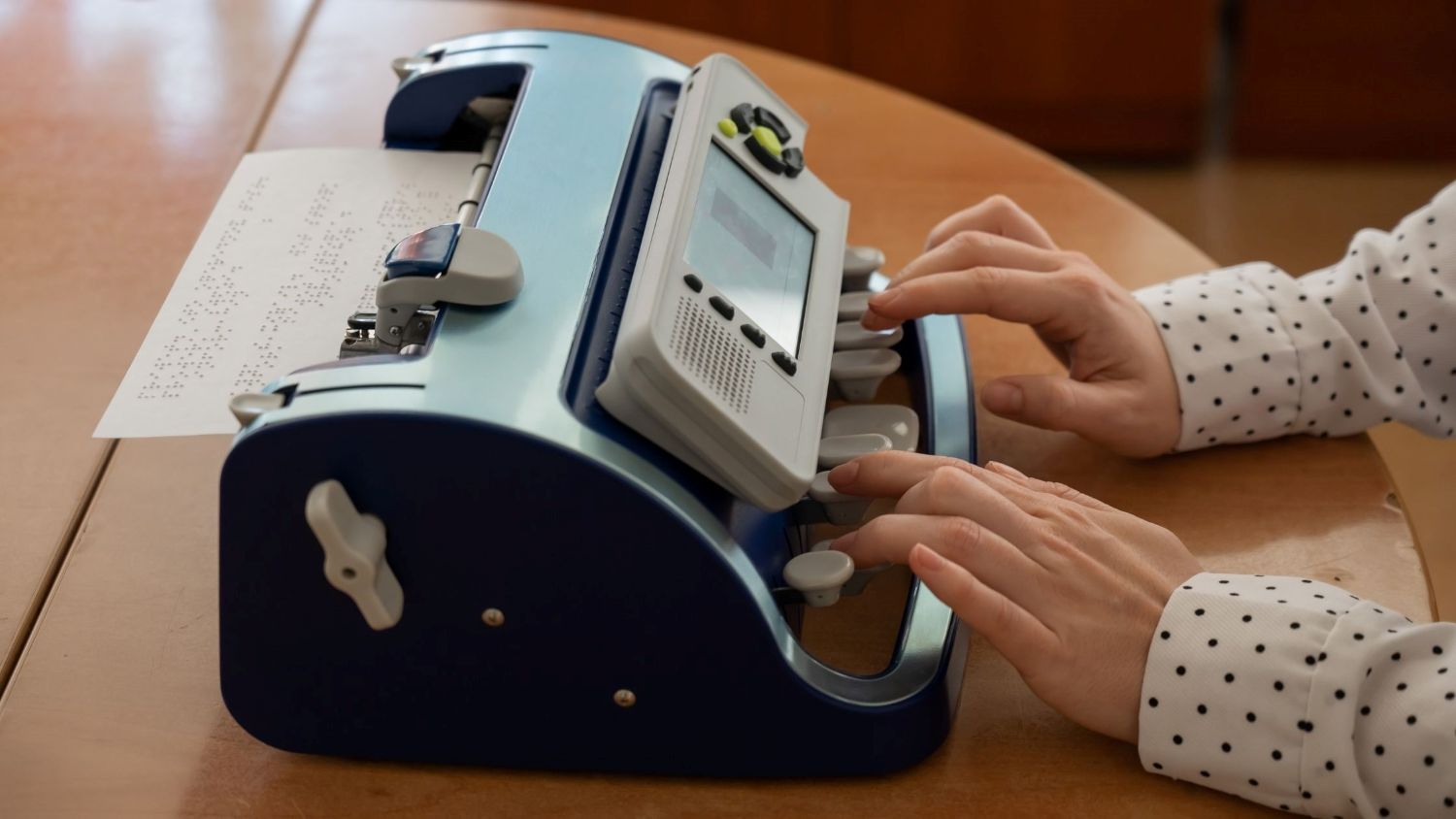
- Accessibility signage with Braille
- Ramps
- Height-adjustable desks
- Doors that are wider and easier to open
- Grab bars
- Accessible restrooms
- Other furniture modifications as needed
Here’s the thing. You’re technically only required to make these changes if you have an applicant or employee with a disability, you’re in a commercial space, or you serve the public. But waiting until someone shows up? That’s reactive and can disrupt your operations while costing more in rush fees and redesigns.
Being ADA-ready from the start is just smart planning.
What Is Website Accessibility and Why Does It Matter in 2026?
Technical accessibility means removing digital barriers through website improvements and assistive technologies like screen-reading software, captioning services, and accessible video conferencing platforms.
Website accessibility has become absolutely critical. It affects everyone who interacts with your brand online. Potential applicants, current employees, customers, and the general public all rely on your digital presence. With remote work normalized and digital-first interactions becoming standard, accessible websites and digital tools aren’t optional anymore.
Here’s how to make your digital presence accessible.
Run a comprehensive website audit.
Use tools like the WAVE Web Accessibility Evaluation Tool, axe DevTools, or Lighthouse to identify accessibility issues like missing alt text, poor contrast, or keyboard navigation problems.
Add descriptive alt text to all images.
Alt text provides descriptions that screen readers use to explain images to people who can’t see them. Be specific and explain how the image relates to your content. Generic descriptions like “Image123” don’t help anyone.
Create a strong color contrast.
People with visual disabilities struggle with poor color contrast. Pair light text with dark backgrounds or vice versa. Aim for a contrast ratio of at least 4.5 to 1 for normal text.
Never use color alone to convey information.
Don’t rely on color-coded instructions (like making required fields red). People with color blindness can’t distinguish certain colors, and screen readers can’t interpret them. Be explicit with your instructions.
Caption all your videos.
Everyone with hearing impairments should be able to understand your video content. Use auto-captions as a starting point, but edit them manually for accuracy. AI still makes mistakes.
Make your PDFs accessible.
Many companies forget this one. PDFs need proper tagging, reading order, and alternative text to work with screen readers.
Test with real users.
Nothing beats getting feedback from people who actually use assistive technologies. Consider user testing with people with disabilities.
For more detailed guidance, check out the Web Content Accessibility Guidelines (WCAG) 2.2 and Section 508 Standards.
What Does “Reasonable Accommodation” Actually Mean?
“Reasonable accommodation” is intentionally flexible. It’s up to you to determine how to create a workplace where everyone can do their best work. When you’re working through this, keep these three principles front and center.
Diversity matters, not just in your workforce, but in leadership too. Having people with disabilities in management and executive roles sends a powerful message about real opportunity and representation.
Equity means people with disabilities deserve the same career development opportunities as everyone else. Sometimes that means providing additional support or accommodations to level the playing field and eliminate organizational, physical, or technical barriers.
Inclusion requires protection from discrimination and access to all the same benefits as other employees. Here’s an example. You’re not required to provide a special parking space for an employee with a disability. But if free parking is a benefit you give everyone, then you must provide it to employees with disabilities too, with whatever accommodations help them fully enjoy that benefit.
Ready to Build a Workplace That Works for Everyone?
ADA compliance in 2026 isn’t just about checking legal boxes. It’s about creating a culture where every person has the opportunity to bring their full talents to work.
At Workforce Solutions, we take the work out of compliance by handling all the details for you. From auditing your current practices to implementing HR automation and policies that keep you protected, we make accessibility achievable.
Ready to discover the potential in your workforce? Reach out to Workforce Solutions today. Let our people and culture professionals help you build accessibility into your company’s DNA and create a workplace where hidden talents can finally shine.